
Ingredients
Equipment
Method
- Preheat the oven to 350° F.
- Prepare the baking sheets with parchment paper, set aside.
- Mix the powdered egg substitute to the package direction in a small bowl and set aside.
- If using dried hibiscus flower, add a little to a spice or coffee grinder and pulse the flowers to a coarse grind, but not powdery.
- You can eliminate the above step by using hibiscus tea bags, cut them open and poured them into the mixing bowl with the flour.
- In a medium sized mixing bowl, blend the flour, baking powder, salt, ground hibiscus flowers, and baking soda together and set aside.
- Next, in a large mixing bowl, blend together the sugar, plant based milk, margarine, oil, vanilla extract, and lemon juice.
- Pour in the egg substitute and continue blending until smooth.
- Slowly add the dry ingredients to the wet ingredients until well blended.
- Scoop about a tablespoon of dough from the bowl and place it onto the lined baking sheet, continue until the baking sheet is full.
- Place both baking sheets into the oven and bake for about 5 to 7 minutes, then rotate the baking sheet and bake for another 5 to 7 minutes.
- Watch the cookies closely, baking times can vary.
- Once the cookies are done they will be slightly golden brown along the edges and firm to the touch.
- Remove the cookies from the oven, leave them on the baking sheet for a few minutes and then move them to a cooling rack.
- Once the cookies have completely cooled, it is time to frost.
Frosting the cookies
- In a small bowl, mix together the powdered sugar, salt, plant based milk, vanilla extract, lemon juice.
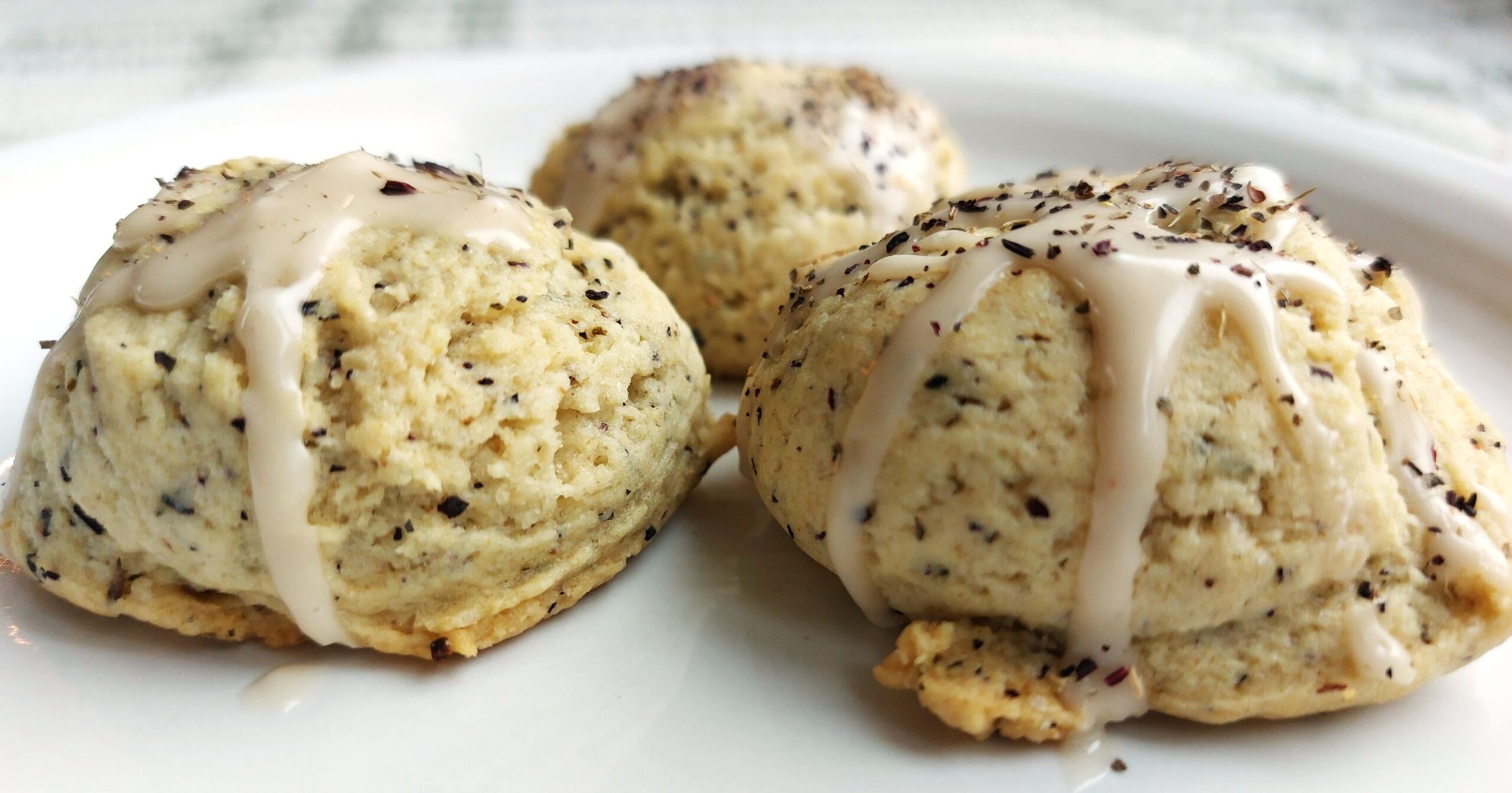
- Drizzle each cookie with the frosting.
- Grind more hibiscus flower or use hibiscus tea and sprinkle on top of each frosted cookie.
- Leave the cookies until the frosting has hardened.
- Store the cookies in a flat container, making sure to not disturb the frosting.
- Enjoy your cookies with a hot or cold beverage.